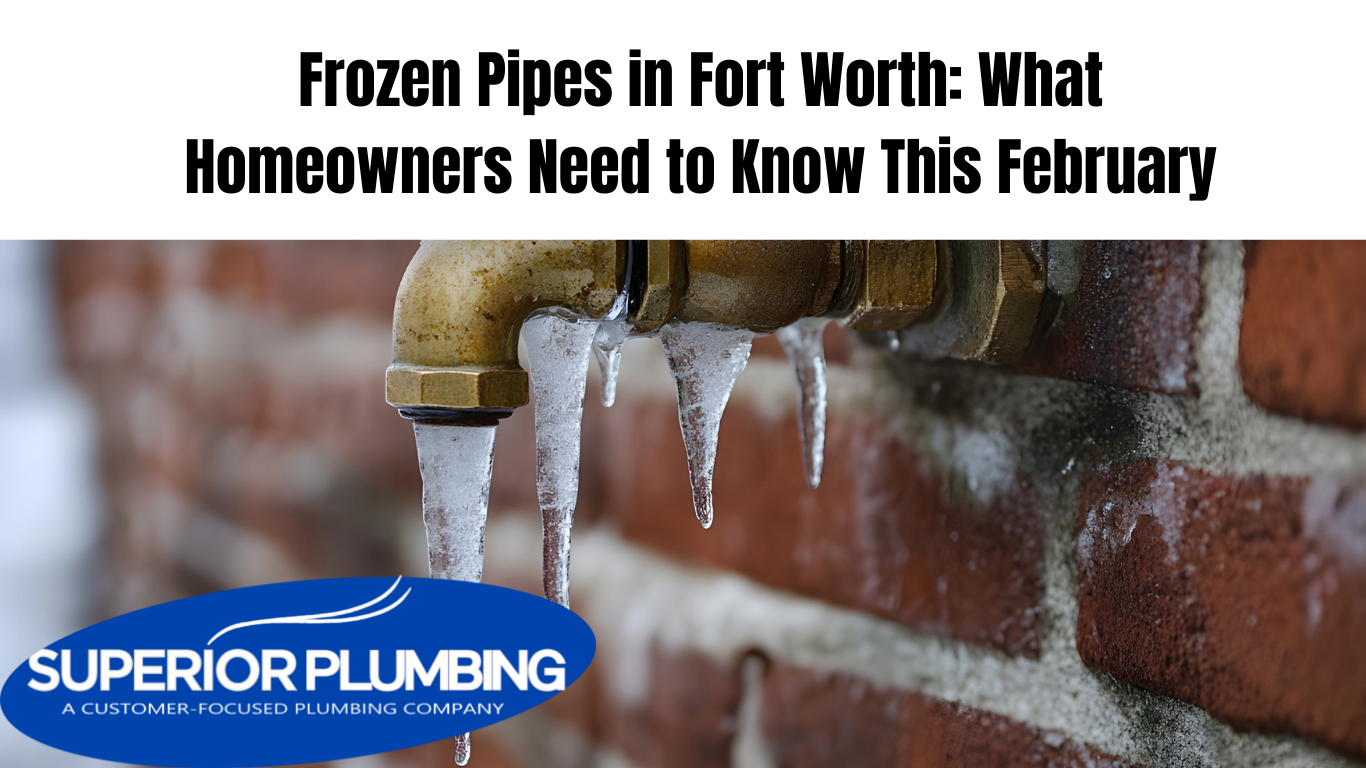
Frozen Pipes in Fort Worth: What Homeowners Need to Know This February
Trusted by homeowners across Burleson and Fort Worth, TX
As February approaches, Fort Worth homeowners need to be especially alert to winter plumbing risks. Cold snaps in North Texas are often sudden and intense, and one of the most damaging problems they cause is frozen pipes in Fort Worth homes. When pipes freeze, they don’t just stop water flow—they can crack or burst, leading to flooding, mold, and expensive repairs.
Understanding how frozen pipes happen, how to prevent them, and what to do if they occur can help you protect your home during the coldest weeks of the year.
Why Frozen Pipes Are Common in Fort Worth
Fort Worth homes are not typically designed for prolonged freezing temperatures. Many plumbing lines run through attics, garages, exterior walls, and crawl spaces where insulation is limited. When temperatures drop below freezing, water inside these pipes can freeze and expand, putting pressure on the pipe walls.
This expansion is what causes pipes to crack or burst—often without immediate signs. In many cases, homeowners don’t realize there’s a problem until temperatures rise and water starts leaking into walls, ceilings, or floors.
According to the Insurance Institute for Business & Home Safety, frozen pipes are one of the leading causes of winter-related water damage in regions that experience infrequent but severe freezes, like North Texas.
Areas of the Home Most at Risk
To reduce the risk of frozen pipes in Fort Worth, it’s important to know where problems usually begin. The most vulnerable areas include:
Pipes in unheated attics
Plumbing in garages
Exterior walls behind sinks and toilets
Outdoor hose bibs
Crawl spaces with little insulation
These areas are often exposed to cold air and experience temperature swings that make freezing more likely.
Warning Signs Your Pipes May Be Freezing
Frozen pipes don’t always burst right away. Recognizing early warning signs can help you act before serious damage occurs. Watch for:
Little or no water coming from faucets
Frost on exposed pipes
Unusual odors from drains
Strange noises when turning on taps
If water pressure suddenly drops or stops completely during freezing weather, assume a pipe may be frozen and act quickly.
How to Prevent Frozen Pipes This February
Preparation is the best defense against winter plumbing damage. These steps can greatly reduce your risk.
Insulate Exposed Pipes
Insulating pipes in attics, garages, crawl spaces, and exterior walls is one of the most effective prevention methods. Foam pipe insulation or heat tape helps maintain temperature and protect pipes during overnight freezes.
If your home has older plumbing or a history of winter issues, a professional inspection can identify weak points before temperatures drop.
Seal Drafts and Air Leaks
Cold air entering your home can freeze pipes even when indoor temperatures seem safe. Seal gaps around doors, windows, vents, and where pipes enter walls. Garage doors and attic access points are common trouble spots.
Keep Your Home Heated
Never turn off your heat during freezing weather—even if you’re away. Set your thermostat to at least 55°F. Open cabinet doors under sinks to allow warm air to circulate around plumbing, especially on exterior walls.
Let Faucets Drip Overnight
Allowing faucets to drip slightly keeps water moving, reducing the chance of freezing. Focus on fixtures connected to exterior or uninsulated pipes. The small increase in water usage is far less costly than repairing burst pipes.
What to Do If Pipes Freeze
If you suspect frozen pipes:
Turn on the affected faucet slightly to relieve pressure
Apply gentle heat using a hair dryer or warm towels
Never use open flames or space heaters
Keep cabinet doors open to increase airflow
If you can’t locate the frozen section or safely thaw it, call a professional plumber right away. Improper thawing can cause pipes to burst suddenly.
What If a Pipe Bursts?
A burst pipe is a plumbing emergency. If it happens:
Shut off your main water supply immediately
Turn off electricity if water is near outlets
Contain water with towels or buckets
Call for emergency plumbing service right away
Fast response can limit damage and prevent mold growth. Superior Plumbing provides 24/7 emergency plumbing services to help Fort Worth homeowners during winter emergencies.
How Professional Plumbers Help During Freezes
Licensed plumbers can help homeowners prepare before a freeze and respond quickly when problems occur. Services such as leak detection can identify cracks or weaknesses caused by freezing before they turn into major leaks.
Plumbers can also inspect water heaters, which often fail during cold weather due to increased demand. Routine water heater service help ensure reliable hot water during winter months.
Real Testimonial
“During the last freeze, we had pipes freeze in our attic. Superior Plumbing responded fast and fixed the problem before it turned into a disaster. Their team was professional and incredibly helpful.” – Chris W.
Why Acting Early Matters
Most damage from frozen pipes in Fort Worth occurs after temperatures rise, not while pipes are frozen. Small cracks created by ice expansion can release gallons of water in minutes once the ice melts.
The Environmental Protection Agency notes that mold can begin growing within 24 to 48 hours after water damage, which is why fast action and professional repairs are so important.
Stay Ahead of February Freezes
February is often the coldest month in North Texas, and it’s not the time to take chances with your plumbing. By insulating pipes, sealing drafts, keeping your home warm, and knowing what to do in an emergency, you can protect your home from costly winter damage.
If you’re concerned about frozen pipes or want peace of mind before the next cold front, Superior Plumbing is ready to help. Their experienced team provides preventative inspections and emergency service to keep Fort Worth homes safe all winter long.
Call today to schedule a winter plumbing check and stay protected this February.
Request a free quote
Tell us what’s going on and we’ll get right back to you. Need help now? Call and a real plumber answers 24/7.