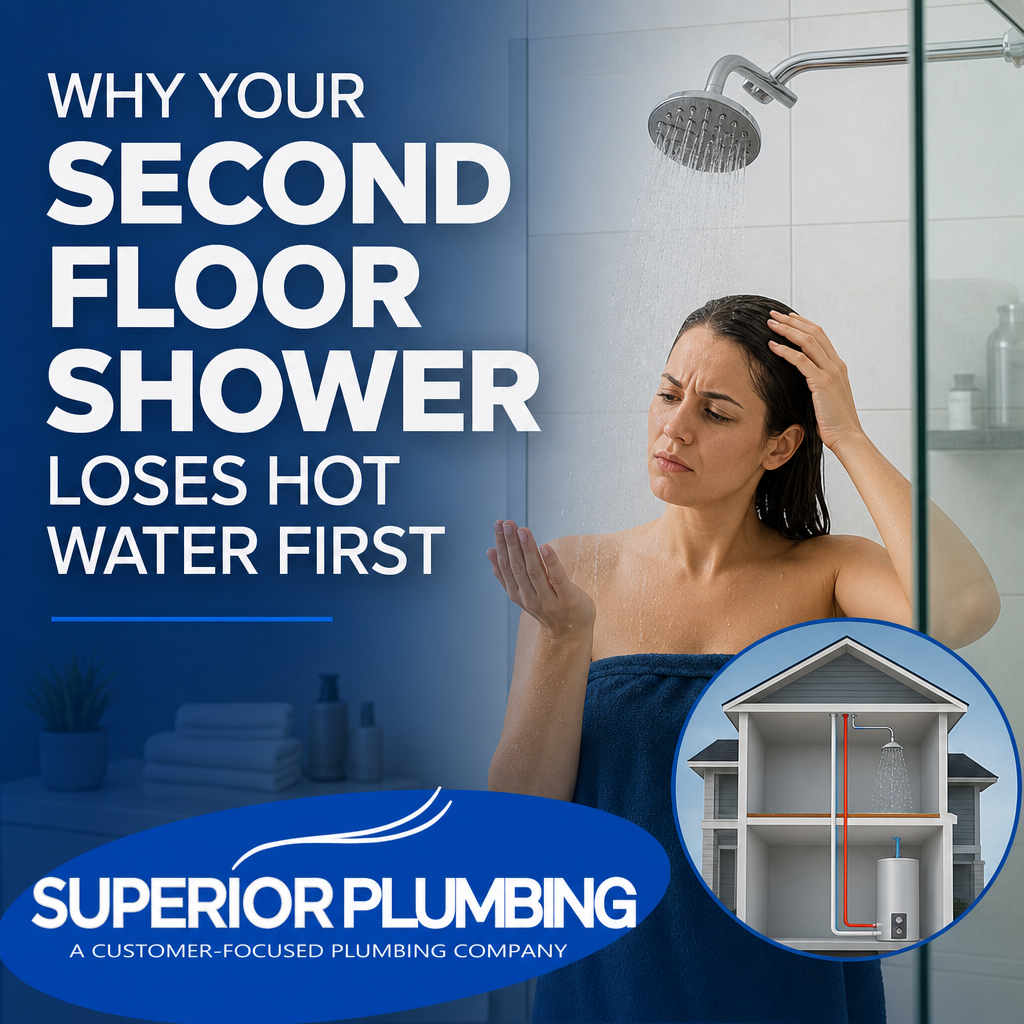
Why Your Second Floor Shower Loses Hot Water First
Trusted by homeowners across Burleson and Fort Worth, TX
Does your second floor shower lose hot water first, even when the downstairs faucets still seem fine? Superior Plumbing helps Burleson and DFW homeowners identify the cause, repair the issue, and restore dependable hot water.
If the upstairs shower turns cold before the rest of the house, the problem may be more than a minor inconvenience. Hot water delivery depends on your water heater, plumbing layout, fixture condition, pipe insulation, pressure balance, and overall system demand. When one second floor shower consistently loses hot water faster than other fixtures, it is often a sign that your plumbing system needs professional attention before the issue leads to higher utility bills, water heater strain, or hidden repair costs.
Second Floor Shower Hot Water Problems and What They Usually Mean
An upstairs shower often sits farther away from the water heater than downstairs sinks, tubs, or laundry fixtures. That longer pipe run means hot water has to travel a greater distance before reaching the shower valve. If the pipes are uninsulated, routed through cold areas, or affected by mineral buildup, heat can be lost before the water reaches the fixture.
The issue may also be connected to household demand. For example, if someone starts the dishwasher, washing machine, or another shower while the upstairs bathroom is in use, the water heater may struggle to keep up. This is especially common in homes with older tanks, undersized units, or water heaters that have sediment buildup reducing available hot water volume.
Superior Plumbing often finds that an upstairs shower problem is not isolated to the bathroom itself. Your water heater, supply lines, shower valve, and drain system all work together. A careful inspection can determine whether you need water heater repair, fixture service, pipe adjustments, or a larger system recommendation.
Common Causes of an Upstairs Shower Running Out of Hot Water
One of the most common causes is sediment inside the water heater tank. North Texas homes often deal with mineral-heavy water. Over time, minerals settle at the bottom of the tank, reducing capacity and making the burner or heating elements work harder. A 50-gallon tank with heavy sediment may no longer deliver anything close to 50 gallons of usable hot water.
Another common cause is a failing dip tube. The dip tube sends incoming cold water to the bottom of the tank so it can be heated properly. If it cracks or breaks, cold water may mix near the top of the tank and get pushed into your hot water lines too quickly. This can make showers turn lukewarm long before they should.
A worn shower mixing valve can also cause trouble. The valve blends hot and cold water to create a comfortable temperature. If the cartridge is clogged, corroded, or failing, it may restrict hot water flow or allow too much cold water into the mix. This is especially noticeable at one shower while other fixtures still perform normally.
Water Heater Size, Age, and Recovery Rate Matter
A water heater must be sized for the number of people, fixtures, and daily usage habits in your home. A family with multiple bathrooms, back-to-back showers, laundry, and dishwashing needs more hot water capacity than a smaller household. If your second floor shower loses hot water first during busy mornings, the tank may simply be undersized for current demand.
Age also matters. As water heaters get older, they often lose efficiency. Gas burners, electric elements, thermostats, anode rods, and tank interiors all affect performance. A unit that once handled your household may now recover slowly, produce inconsistent temperatures, or run out of hot water faster.
Superior Plumbing can help you compare repair and replacement options. If the water heater is newer and the issue is a failed thermostat, heating element, valve, or dip tube, repair may make sense. If the tank is older, leaking, rusty, or repeatedly underperforming, water heater replacement may provide better long-term reliability.
Shower Valve and Fixture Issues That Limit Hot Water
If only one upstairs shower has the problem, the shower valve deserves close attention. Pressure-balancing valves are designed to protect users from sudden temperature changes when another fixture is used. When these valves wear out or become clogged with scale, they may reduce hot water flow even though the water heater is working properly.
Cartridge problems are also common. A cartridge can become stiff, blocked, or misaligned. Homeowners may notice the shower handle does not turn as smoothly, the temperature is hard to control, or the water never gets as hot as it used to. Replacing or servicing the cartridge may restore proper mixing.
Fixture flow rate can also play a role. High-flow showerheads use hot water faster than low-flow models. If your upstairs shower has a large rain head or multiple spray settings, it may drain the tank more quickly, especially during long showers. A plumber can help determine whether the fixture, valve, or water heater capacity is the main issue.
Pipe Distance, Heat Loss, and Water Pressure in Two-Story Homes
Second floor bathrooms often have longer plumbing runs. Hot water may pass through walls, ceilings, attic areas, or unconditioned spaces before reaching the shower. If pipes are poorly insulated, water can cool in the line, causing delayed hot water and shorter comfortable shower time.
Water pressure also affects performance. If pressure is too high, fixtures may use more water than expected, draining the hot water supply faster. If pressure is too low due to corrosion, buildup, or a partially closed valve, the shower may feel weak and inconsistent. Either condition can point to system-wide plumbing concerns.
A professional inspection may include checking supply line routing, pressure levels, fixture flow, shutoff valves, and signs of corrosion. These details help identify whether the issue is a water delivery problem or a heating problem. Superior Plumbing provides residential plumbing support for these comfort and reliability concerns throughout Burleson, Fort Worth, Arlington, Mansfield, Crowley, Joshua, Benbrook, and nearby North Texas communities.
Warning Signs That Point to a Bigger Plumbing Issue
A shower that turns cold quickly may be the first noticeable symptom, but other signs can point to a larger problem. Catching these early can help reduce the chance of water damage, emergency repairs, or premature equipment failure.
Watch for these warning signs:
- Hot water runs out faster than it used to
- Water temperature changes suddenly during showers
- Rust-colored hot water from faucets
- Popping or rumbling sounds from the water heater
- Low hot water pressure upstairs
- Leaks around the water heater or nearby pipes
- Higher gas, electric, or water bills without a clear reason
- Damp spots on ceilings or walls below upstairs bathrooms
Leaks around upstairs showers deserve fast attention. Even a small leak behind tile or drywall can contribute to mold growth, wood deterioration, stained ceilings, and structural damage. Superior Plumbing offers leak detection and repair services to locate hidden water problems before they become more expensive.
Drain and Sewer Issues Can Affect the Shower Experience Too
Hot water problems are usually tied to the supply side of the plumbing system, but drains still matter. If your upstairs shower drains slowly, water may pool around your feet, making the shower feel uncomfortable even when the water temperature is acceptable. A slow drain can also hide other plumbing concerns.
Shower clogs often form from hair, soap scum, body oils, mineral scale, and improper disposal habits. In some homes, recurring clogs may be connected to deeper drain line buildup or sewer issues. Tree roots, grease, and aging pipes can affect how wastewater leaves the home.
Superior Plumbing provides drain cleaning, clog removal, sewer line inspections, and sewer repair recommendations when needed. A healthy plumbing system depends on both clean water delivery and proper wastewater removal. Ignoring either side can lead to backups, odors, water damage, and costly disruptions.
Repair Costs, Water Damage Risks, and Smart Long-Term Decisions
Most homeowners want to know whether the fix will be simple or expensive. The answer depends on the cause. A shower cartridge replacement, thermostat repair, or valve adjustment may be less involved than replacing a failing water heater or correcting pipe layout problems. A plumber should explain the findings clearly, show what is urgent, and separate necessary repairs from optional improvements.
Emergency situations require a different approach. If you see active leaking, water stains spreading across a ceiling, pooling near the water heater, or sudden loss of hot water throughout the home, it is wise to request emergency plumbing service. Fast action can limit damage to flooring, drywall, cabinetry, and personal belongings.
Preventative maintenance helps reduce surprise plumbing problems. Flushing a water heater when appropriate, checking the anode rod, inspecting valves, monitoring water pressure, cleaning drains, and repairing small leaks early can extend system performance. For property managers and businesses, scheduled commercial plumbing maintenance can also reduce tenant complaints, downtime, and emergency calls.
Choosing the right plumbing contractor matters. Look for experienced technicians, transparent communication, practical repair options, and a company that considers the entire plumbing system instead of only the visible symptom. Superior Plumbing focuses on honest recommendations, dependable workmanship, and helping customers make decisions that fit the property’s needs and budget.
When You Need Help With a Second Floor Shower Losing Hot Water
When you need a reliable answer for a second floor shower that loses hot water first, Superior Plumbing can inspect the water heater, shower valve, supply lines, pressure conditions, and related plumbing components. The goal is to find the actual cause instead of guessing or replacing parts unnecessarily.
Our team serves homeowners, businesses, and property managers in Burleson, Fort Worth, Arlington, Mansfield, Crowley, Joshua, Benbrook, and surrounding DFW communities. Whether you need water heater service, leak detection, drain cleaning, sewer solutions, fixture repair, or preventative maintenance, we provide clear explanations and practical recommendations.
If your upstairs shower keeps turning cold, do not wait until the problem becomes a leak, water heater failure, or emergency plumbing situation. Contact Superior Plumbing to schedule service and restore dependable hot water where you need it most.
Request a free quote
Tell us what’s going on and we’ll get right back to you. Need help now? Call and a real plumber answers 24/7.