What Causes Knocking Sounds In Walls When Water Is Running
Trusted by homeowners across Burleson and Fort Worth, TX
Are knocking sounds in walls when water is running making you wonder if a pipe is loose, your water pressure is too high, or a hidden plumbing problem is starting? Superior Plumbing helps homeowners and businesses identify the cause of knocking pipes and get reliable plumbing repairs before noise turns into water damage or costly repairs.
Knocking, banging, or thumping sounds inside your walls usually point to pressure changes, pipe movement, loose supports, or valve issues within your plumbing system. Sometimes the sound is a minor nuisance. Other times, it can be an early warning sign of stress on water lines, fixtures, shutoff valves, or appliances. Understanding the cause helps you know when to schedule professional plumbing services and when the issue may require urgent attention.
What causes knocking pipes when water is running?
One of the most common causes of knocking sounds in walls when water is running is pipe movement. Water moving through supply lines creates force. If pipes are not properly secured, that force can make them hit framing, drywall, or nearby plumbing components. This is especially common in older homes, remodeled properties, or areas where pipe straps have loosened over time.
Knocking may also happen when water pressure changes suddenly. A washing machine, dishwasher, toilet fill valve, shower valve, or faucet can cause a quick shift in pressure. That sudden movement may create a sharp bang or repeated tapping sound. While one noise may not mean your plumbing system is failing, repeated knocking should not be ignored because pressure stress can wear down fittings, joints, and valves.
In homes across Burleson, Fort Worth, Arlington, Mansfield, Crowley, Joshua, Benbrook, and nearby North Texas communities, Superior Plumbing often finds that wall noises are connected to multiple factors at once: high pressure, aging pipe supports, older valves, and fixture wear. A professional inspection helps pinpoint the real cause instead of guessing.
Water hammer and sudden pipe banging after shutting off fixtures
Water hammer is a pressure shock that happens when fast-moving water stops suddenly. You may hear a loud bang after turning off a faucet, when a toilet finishes refilling, or when a washing machine valve closes. The water has momentum, and when flow stops abruptly, that force travels through the pipe system.
Many homes have air chambers or water hammer arrestors designed to absorb this shock. Over time, air chambers can become waterlogged, and arrestors can wear out or be missing from key areas. When that happens, the shock transfers into the piping, causing banging inside walls or ceilings.
Water hammer is more than an annoying sound. The repeated force can stress pipe joints, appliance connections, shutoff valves, and fixture supply lines. If you hear loud bangs near laundry rooms, bathrooms, kitchens, or water heater piping, scheduling water hammer repair or a plumbing evaluation can help protect your system from unnecessary wear.
High water pressure and pressure reducing valve problems
High water pressure can make plumbing noises worse. Many homeowners enjoy strong shower pressure, but excessive pressure can damage fixtures, valves, water heaters, supply lines, and appliances. If the knocking happens throughout the home rather than in one isolated area, your water pressure may be above a safe operating range.
A pressure reducing valve, often called a PRV, helps control water pressure coming into the property. If the PRV fails or is not properly adjusted, the whole plumbing system may experience added stress. Signs of high pressure can include banging pipes, running toilets, dripping faucets, short water heater relief valve discharge, or appliance supply line wear.
Superior Plumbing can test your pressure, inspect the PRV, and recommend practical options. Sometimes an adjustment is enough. In other cases, valve replacement is the better long-term choice. Addressing water pressure can also support water heater performance, reduce fixture wear, and lower the chance of unexpected plumbing repairs.
Loose pipes behind walls, ceilings, and under floors
Loose pipe supports are another common source of wall knocking. Pipes are supposed to be secured with brackets, straps, or clamps that hold them in place while still allowing normal expansion and contraction. When supports break, loosen, or were installed too far apart, pipes can shift every time water runs.
You might notice this noise when someone takes a shower upstairs, flushes a toilet, runs a sink, or starts the dishwasher. In some cases, the sound comes from pipes rubbing against wood framing or hitting drywall. Copper, PEX, and other pipe materials can all make noise when movement is not controlled.
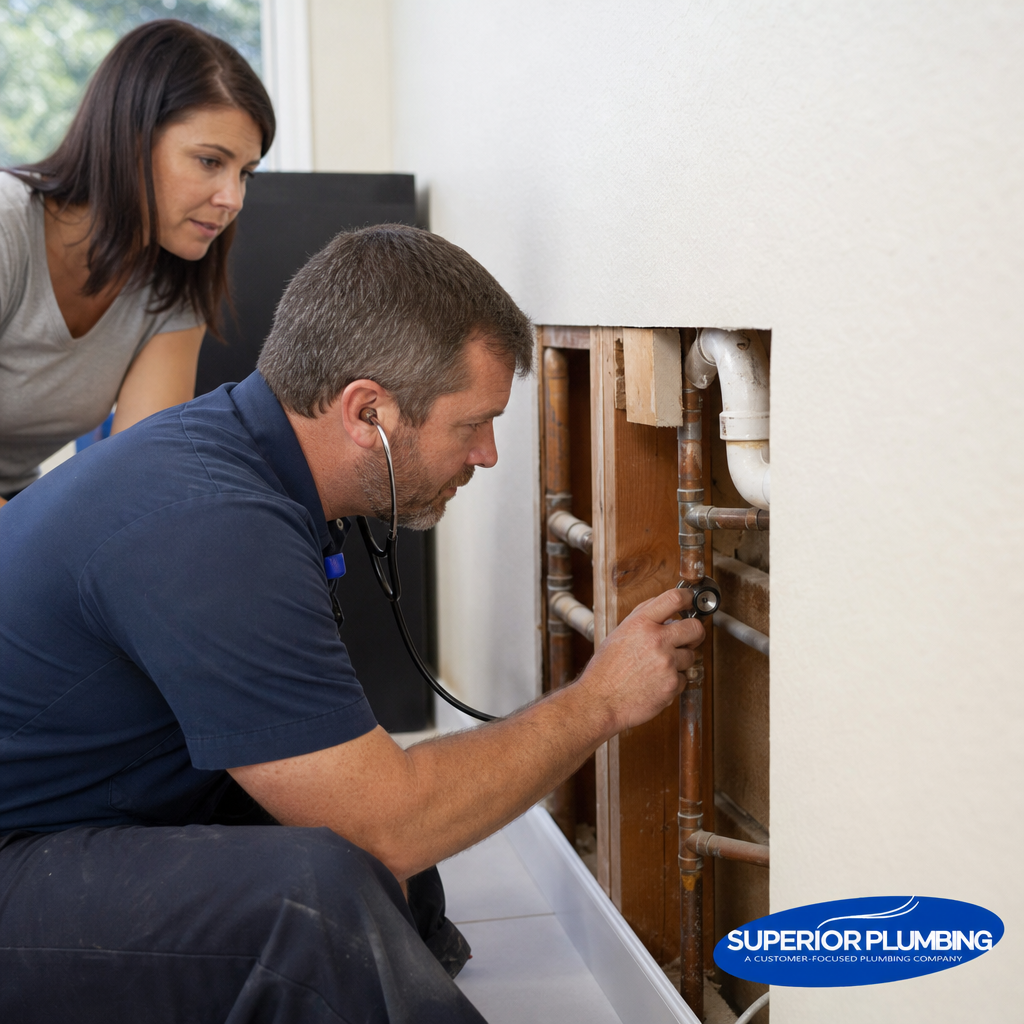
Repair options depend on access. If pipes are reachable from an attic, crawl space, cabinet, or unfinished area, securing them may be straightforward. If the noise is behind finished walls, a plumber may use sound patterns, fixture testing, and inspection tools to locate the problem with minimal disruption. This is where experienced residential plumbing service makes a real difference.
Knocking sounds linked to leaks, slab leaks, and hidden water line damage
Not every knocking noise means there is a leak, but pipe movement and pressure problems can contribute to leaks over time. A small leak behind a wall or beneath a slab may not make a loud sound at first. Instead, you may notice water stains, warm flooring, musty odors, higher utility bills, low water pressure, or unexplained damp areas.
Hidden leaks can lead to water damage, mold growth, structural deterioration, and rising water costs. Slab leaks are especially concerning because water may travel under flooring before visible damage appears. If knocking sounds are paired with any moisture symptoms, professional leak detection should be scheduled promptly.
Superior Plumbing uses diagnostic methods to help identify the source of hidden plumbing issues. Early action can reduce damage and help property owners choose the right repair path, whether that involves a localized pipe repair, rerouting a damaged line, or addressing pressure conditions that contributed to the problem.
Drain and sewer issues that can sound like wall or pipe noise
Not all wall sounds come from supply pipes. Drain lines can also create knocking, gurgling, thumping, or vibration sounds. Drains rely on gravity, venting, and clear pathways to move wastewater away from sinks, tubs, toilets, laundry areas, and floor drains. If buildup restricts flow, the system can make unusual noises.
Grease, soap scum, hair, food particles, wipes, sediment, and improper disposal habits can all contribute to recurring clogs. Tree roots can also invade underground sewer lines, creating slow drains, backups, and pressure changes in the drainage system. A noise near a bathroom wall may be connected to a drain line rather than a water supply line.
Warning signs that point toward drain cleaning or sewer service include:
- Multiple slow drains in the home
- Gurgling toilets or tubs
- Sewer odors near fixtures
- Water backing up into showers or floor drains
- Recurring clogs after basic plunging
- Wet spots or soft soil near sewer lines
If these symptoms appear with knocking or gurgling sounds, Superior Plumbing can inspect the system and recommend sewer and drain solutions before the issue becomes more disruptive.
Water heater noises that travel through plumbing lines
Sometimes the sound seems to come from the wall, but the source is the water heater. Sediment buildup in the tank can cause popping, rumbling, or knocking sounds as water heats. These noises may travel through nearby piping and make it difficult to identify the true source.
Sediment forms when minerals settle at the bottom of the tank. Over time, the burner or heating elements must work harder to heat water through that layer of buildup. This can reduce efficiency, affect hot water recovery, and put extra stress on the unit. If the water heater is older, leaking, producing rusty water, or failing to keep up with demand, it may be time to discuss water heater repair or replacement.
Repair-versus-replacement depends on the unit’s age, condition, leak status, repair cost, and performance. Superior Plumbing helps customers compare practical options without pushing unnecessary replacement. A properly functioning water heater is part of the complete plumbing system, and noise should be evaluated before a small issue turns into a major inconvenience.
Cost concerns, property protection, and choosing the right plumbing contractor
Most homeowners want to know whether knocking pipes are urgent, how much the repair may cost, and whether the issue could cause water damage. The answer depends on the cause. Securing an accessible pipe may be a simpler repair. Replacing a failed pressure reducing valve, adding water hammer arrestors, locating a hidden leak, or correcting a slab leak may involve more diagnostic work and planning.
Ignoring repeated knocking can increase risk. Constant pipe movement may loosen fittings. High pressure may shorten the life of faucets, toilets, water heaters, appliance hoses, and shutoff valves. Hidden leaks can damage drywall, flooring, cabinetry, and framing. Preventative plumbing maintenance helps catch pressure problems, fixture wear, and drainage issues before they become emergency situations.
Choosing the right plumbing contractor matters. Look for transparent communication, clear repair explanations, experience with residential and commercial plumbing, and technicians who take time to inspect the full system. Superior Plumbing focuses on honest recommendations, dependable workmanship, and long-term plumbing reliability for homeowners, property managers, and businesses throughout the Burleson and DFW area.
When you need help with knocking pipes in your walls
When you need answers about knocking sounds in walls when water is running, Superior Plumbing can help identify the source and recommend the right next step. The problem may involve water hammer, loose pipes, high pressure, a worn valve, drain restrictions, water heater issues, or hidden leaks. A professional inspection gives you clarity before damage gets worse.
Superior Plumbing provides emergency plumbing, leak detection, drain cleaning, water heater repair and replacement, sewer line repair, fixture repair, gas line services, commercial plumbing, residential plumbing, and preventative maintenance across Burleson, Fort Worth, Arlington, Mansfield, Crowley, Joshua, Benbrook, and surrounding North Texas communities.
If your pipes are banging, rattling, or making noises you have not heard before, schedule service with Superior Plumbing. Our team is ready to help protect your property, improve plumbing reliability, and give you straightforward recommendations you can trust.
Request a free quote
Tell us what’s going on and we’ll get right back to you. Need help now? Call and a real plumber answers 24/7.