How To Fix Uneven Water Pressure In Multi Bathroom Homes
Trusted by homeowners across Burleson and Fort Worth, TX
Wondering how to fix uneven water pressure in multi bathroom homes before it leads to leaks, fixture damage, or frustrating daily routines? Superior Plumbing helps homeowners and businesses in Burleson and the surrounding DFW area diagnose pressure problems and restore reliable plumbing performance.
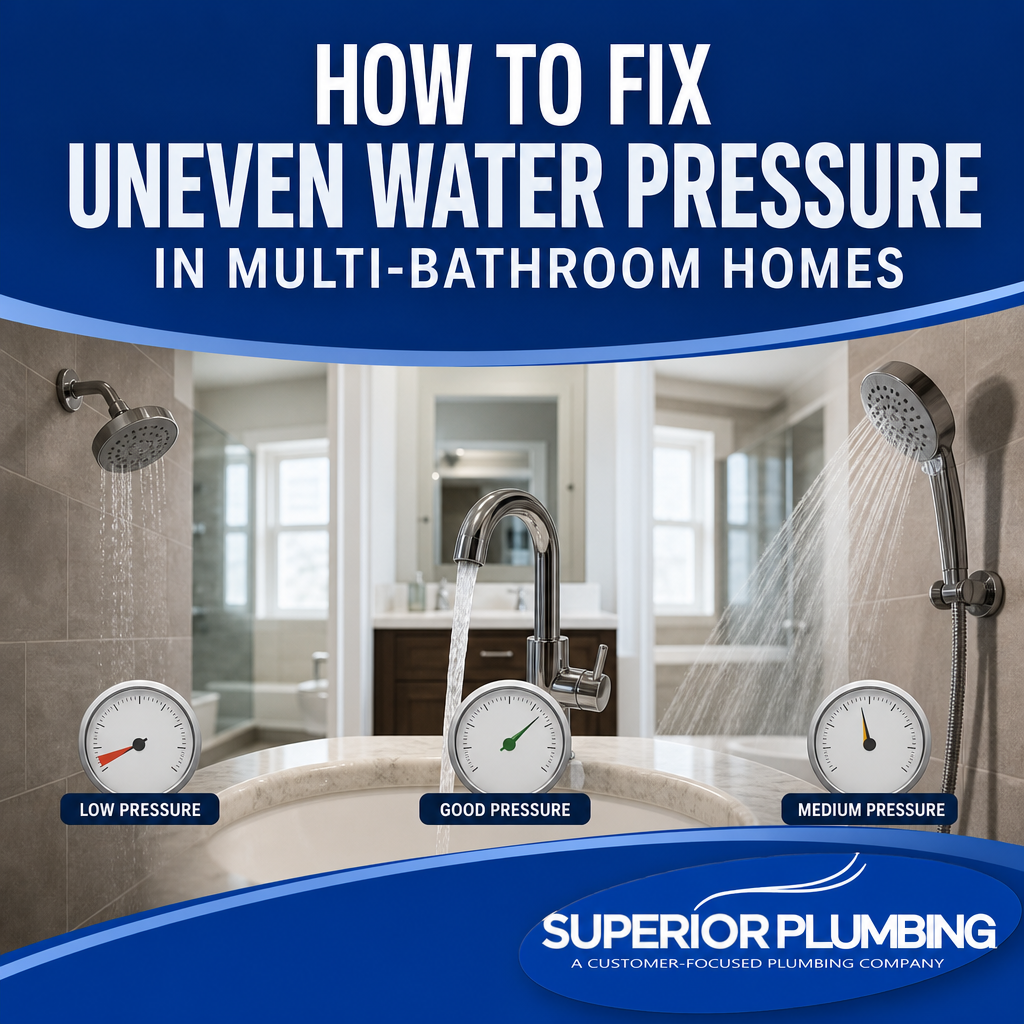
Uneven water pressure in a home with multiple bathrooms usually means one part of the plumbing system is not delivering water as efficiently as the rest. It may be caused by clogged aerators, aging supply lines, mineral buildup, a failing pressure regulator, partially closed valves, leaks, water heater problems, or demand from several fixtures running at once. The right fix depends on whether the issue affects hot water, cold water, one bathroom, every bathroom, or only certain fixtures.
Common causes of uneven water pressure in multi bathroom homes
Multi bathroom homes depend on a balanced plumbing system. Water enters through the main supply line, passes through shutoff valves, branches into hot and cold water lines, and then feeds showers, sinks, toilets, tubs, appliances, and outdoor fixtures. If one part of that system becomes restricted, pressure can drop in one bathroom while the rest of the home seems normal.
One common cause is mineral buildup inside faucet aerators, showerheads, cartridges, or older pipes. North Texas water can leave scale behind over time, especially in fixtures used every day. A guest bathroom may have strong pressure while the primary shower becomes weak because sediment has built up inside that shower valve or head.
Pressure can also change when several fixtures are used at once. If someone is showering upstairs while a washing machine fills and a toilet flushes, older or undersized pipes may struggle to keep up. In other cases, the issue points to a partially closed valve, a failing pressure reducing valve, a hidden leak, or sediment collecting inside the water heater.
Check individual fixtures before assuming a whole-home plumbing problem
If only one faucet or shower has poor pressure, the fixture itself may be the issue. Remove and clean the faucet aerator, inspect the showerhead for mineral buildup, and test both hot and cold water separately. If cold water flows normally but hot water is weak, the concern may be connected to the water heater, hot water line, or mixing valve.
Toilets can also create pressure confusion. A slow-filling toilet does not always mean the home has low water pressure. The fill valve inside the tank may be worn, clogged, or misadjusted. Superior Plumbing often finds that small fixture problems can look like larger residential plumbing issues until each connection is tested carefully.
If several fixtures in the same bathroom have low pressure, the problem may be in the branch supply line serving that bathroom. That can happen when buildup, pipe corrosion, a kinked line, or a valve restriction reduces water flow before it reaches the fixtures.
Low hot water pressure and water heater performance issues
When uneven pressure affects only hot water, the water heater should be inspected. Sediment can settle at the bottom of the tank and restrict performance, especially in homes with frequent hot water demand. A dip tube issue, clogged connection, failing valve, or aging heater can also reduce hot water delivery to distant bathrooms.
This is where water heater repair and replacement decisions matter. If the heater is relatively newer and the issue is a valve, connection, or sediment-related concern, repair or maintenance may restore better performance. If the unit is older, leaking, rusted, undersized, or unable to meet household demand, replacement may be the more practical long-term choice.
Tankless systems can also experience pressure issues if scale builds up inside the heat exchanger or if the unit is not sized correctly for multiple simultaneous showers. A professional inspection helps determine whether cleaning, flushing, part replacement, or a new system is the better option.
Hidden leaks and pressure loss between bathrooms
A hidden leak can cause uneven water pressure because water escapes before it reaches the fixture. Sometimes the pressure drop is subtle. You may notice one shower feels weaker, a toilet refills slowly, or water bills rise without a clear reason. Other warning signs include damp flooring, warm spots on slab floors, musty odors, water stains, peeling paint, or the sound of running water when fixtures are off.
Leaks under slabs, behind walls, or in ceilings can lead to water damage, mold growth, increased utility costs, and structural deterioration if ignored. A small pipe leak can gradually affect drywall, flooring, cabinetry, insulation, and framing. In multi bathroom homes, leaks can be harder to locate because several supply branches may run through walls and floors.
Superior Plumbing uses leak detection methods to narrow down the source before recommending repairs. That may include pressure testing, visual inspection, fixture isolation, listening equipment, or checking water meter movement. Finding the source early can help limit damage and reduce unnecessary demolition.
Drain and sewer issues that can feel like pressure problems
Not every water pressure complaint is actually a supply issue. Sometimes a slow shower drain, gurgling toilet, or backed-up sink makes it seem like water is not flowing properly. If water enters the fixture normally but drains slowly, the issue is likely in the drain system rather than the water supply.
Recurring clogs often come from hair, soap scum, grease, toothpaste residue, wipes, small objects, or improper disposal habits. In sewer lines, tree roots, pipe bellies, collapsed sections, and heavy buildup can affect multiple bathrooms at once. Professional drain cleaning can remove buildup and help identify deeper problems when clogs keep returning.
Warning signs of sewer trouble include multiple drains backing up, sewage odors, bubbling toilets, wet spots in the yard, or water backing into tubs when another fixture runs. Early sewer diagnostics, such as camera inspection, can help determine whether cleaning, spot repair, or sewer line repair is needed.
Steps homeowners can take before calling a plumber
Some basic checks can help you explain the issue clearly and may reveal a simple fix. Before taking anything apart, note where the pressure problem happens and whether it affects hot water, cold water, or both.
Helpful steps include:
- Test each bathroom sink, shower, tub, and toilet separately
- Compare upstairs and downstairs fixtures if applicable
- Clean faucet aerators and showerheads
- Confirm fixture shutoff valves are fully open
- Check whether pressure drops when appliances run
- Look for damp spots, stains, or musty odors
- Review recent plumbing work or new fixture installations
- Watch the water meter when all fixtures are off
If pressure suddenly drops throughout the home, avoid forcing fixtures or ignoring the change. A main valve issue, water line leak, regulator failure, or municipal supply problem may be involved.
Repair costs, emergency concerns, and long-term plumbing reliability
Customers usually care about three things first: cost, urgency, and whether the repair will hold up. Uneven pressure may be inexpensive if it is caused by a clogged aerator, shower cartridge, or valve adjustment. Costs can rise when the issue involves hidden leaks, water heater failure, slab leaks, pressure regulator replacement, corroded piping, or sewer line problems.
The most expensive situations often come from waiting too long. A hidden supply leak can damage flooring and walls. A failing water heater can worsen performance and create property damage if it begins leaking. A sewer backup can disrupt bathrooms, create sanitation concerns, and require urgent cleaning and repairs. If water is actively leaking, sewage is backing up, or pressure drops suddenly, emergency plumbing service may be needed.
Good decisions come from proper diagnosis, not guesswork. Superior Plumbing focuses on transparent communication, practical repair options, and helping customers understand whether maintenance, targeted repair, fixture replacement, pipe repair, or system replacement makes the most sense. Preventative plumbing maintenance can also reduce emergency calls by catching weak valves, sediment buildup, corrosion, leaks, and drainage problems earlier.
When you need help fixing uneven water pressure in a multi bathroom home
When you need dependable help with uneven water pressure, Superior Plumbing can inspect your fixtures, valves, water heater, supply lines, drains, and sewer connections as one complete plumbing system. That complete-system approach matters because pressure problems often involve more than one component.
Our experienced technicians serve Burleson, Fort Worth, Arlington, Mansfield, Crowley, Joshua, Benbrook, and nearby North Texas communities with residential and commercial plumbing services. Whether you need leak detection, drain cleaning, water heater repair, toilet repair, faucet repair, slab leak detection, sewer line solutions, or preventative maintenance, we provide honest recommendations and clear next steps.
If your bathrooms no longer have consistent pressure, do not wait until a small plumbing issue becomes costly water damage or a major repair. Contact Superior Plumbing to schedule service and get professional guidance tailored to your home or property.
Request a free quote
Tell us what’s going on and we’ll get right back to you. Need help now? Call and a real plumber answers 24/7.